Quick answer: Accessible ways to manage foreign currency, cards, ATMs, fees, fraud protection and backup funds while travelling. Accessibility is individual, so verify every critical detail with the responsible provider.
Accessible tourism means that information, booking, transport, accommodation, attractions and support can be used safely and with dignity by people with different mobility, sensory, communication and cognitive requirements. This guide turns that principle into practical actions before, during and after a journey.
Choose a resilient payment mix
Compare total costs
Compare exchange rates, commissions, card foreign-transaction fees, ATM charges and dynamic currency conversion. A zero-commission offer can still include a weaker rate.
Carry more than one payment method
Use a practical mix of cash and cards stored separately. Keep a small emergency reserve and avoid carrying more cash than local rules or personal safety justify.
Tell the bank and check controls
Confirm whether travel notifications are needed, verify international use, set alerts and learn how to freeze a lost card. Save bank contacts outside the wallet.
Make money access safer and easier
Assess ATM accessibility
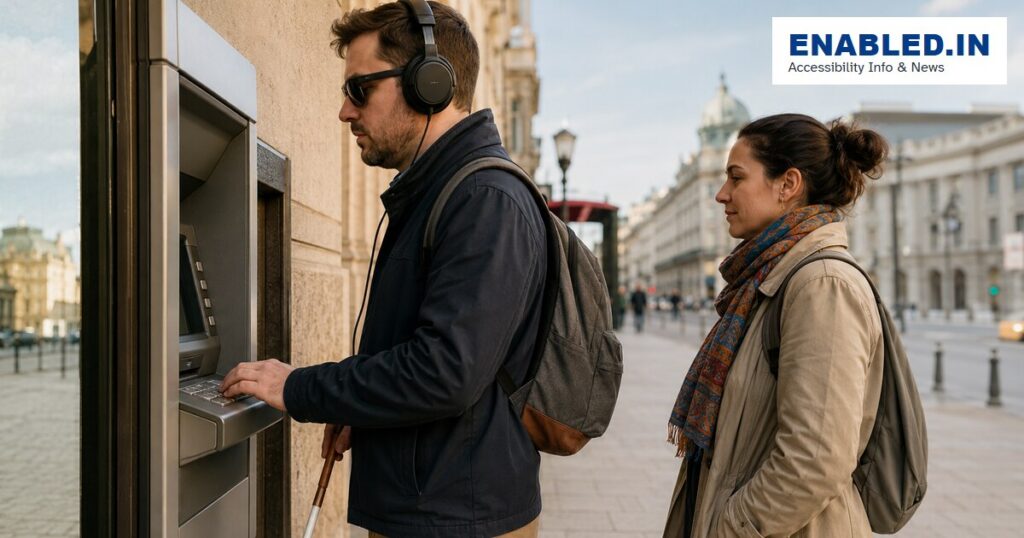
Look for reachable controls, speech output or headphone support, tactile keypads, clear space and good lighting. Use staffed locations when possible and shield the keypad.
Avoid conversion pressure
When offered a choice, understand whether paying in your home currency adds a merchant conversion. Compare the displayed rate and fees rather than accepting automatically.
Prepare accessible backups
Keep an offline record of emergency contacts and essential payment steps, not full card details. A companion can assist only with your consent; protect PINs and financial privacy.
A practical planning timeline
Before travel
Compare card and cash costs, check international use, set alerts and identify accessible banking options. Record decisions in one accessible itinerary so the traveller, companion and providers work from the same information.
At arrival
Obtain a small practical amount of local cash from a trusted source and avoid exposing the full travel budget. Record decisions in one accessible itinerary so the traveller, companion and providers work from the same information.
During the trip
Monitor transactions, store payment methods separately and keep emergency contacts accessible offline. Record decisions in one accessible itinerary so the traveller, companion and providers work from the same information.
If a card is lost
Freeze it promptly, contact the issuer through an official channel and switch to the separate backup method. Record decisions in one accessible itinerary so the traveller, companion and providers work from the same information.
Questions to ask before you pay
Use questions that describe function and process. Ask the provider to answer in writing, and keep the response with the booking.
- What foreign transaction, ATM and cash-advance fees apply?
- Will the card work with contactless payment and accessible PIN devices abroad?
- Does the ATM offer reachable controls, tactile keys, speech output and safe clear space?
- What exchange rate is used when a merchant offers home-currency payment?
- How can the card be frozen and replaced from another country?
If the answer is vague, ask for measurements, photographs, equipment limits, staff procedures and the name of the person confirming the arrangement. An accessibility symbol alone cannot show whether a service matches an individual traveller.
Real-travel situation: what to do
A merchant terminal offers payment in the traveller’s home currency. The convenient-looking option may include a separate conversion rate. The traveller asks to see both options, checks fees and chooses knowingly instead of accepting under pressure.
When a barrier appears, first protect health and safety. State the required outcome clearly, ask for the responsible supervisor or assistance team, keep names and times, take photographs where appropriate and save receipts. If the issue is not resolved, use the operator’s complaint process and the relevant passenger-rights or consumer authority.
Common mistakes to avoid
- Keeping all cash and cards together
- Using an unattended ATM in an isolated place
- Sharing a PIN with a companion or staff member
- Accepting dynamic currency conversion without comparing the rate
- Depending only on a phone wallet that may lose power or connectivity
A good accessible travel plan supports independence without removing choice. The traveller should decide what help is wanted, what information is shared and which backup option is acceptable.
Accessible travel checklist
- Define essential access requirements and preferred support.
- Ask precise questions and request written confirmation.
- Keep accessible offline copies of important information.
- Reconfirm arrangements shortly before departure.
- Allow extra time and prepare a workable alternative.
- Keep evidence of equipment condition, bookings and provider commitments.
- Check official rules for the countries, operators and services involved.
Frequently asked questions
How early should an accessible traveller start planning?
Start as early as practical, especially when accessible rooms, adapted vehicles, assistance appointments or equipment space are limited. Confirm provider-specific deadlines.
Should I rely on an “accessible” label?
No. Ask what the label means in practical terms and compare the answer with your own requirements. Measurements, photos and process details are more useful.
What information should I keep offline?
Keep bookings, assistance confirmations, emergency contacts, medication information and essential equipment details available in an accessible format even without internet access.
Do accessibility rights work the same way everywhere?
No. International principles support equal and dignified access, but legal rights, notice periods and complaint routes vary. Check official authorities for every country and transport mode involved.
Trusted sources and further reading
- UN Tourism: Accessible Tourism
- World Health Organization: Disability and health
- European Commission: Passenger rights
Rules and services vary by country and provider. Confirm current requirements directly with official authorities and operators before paying or travelling.
Discover more from enabled.in
Subscribe to get the latest posts sent to your email.