
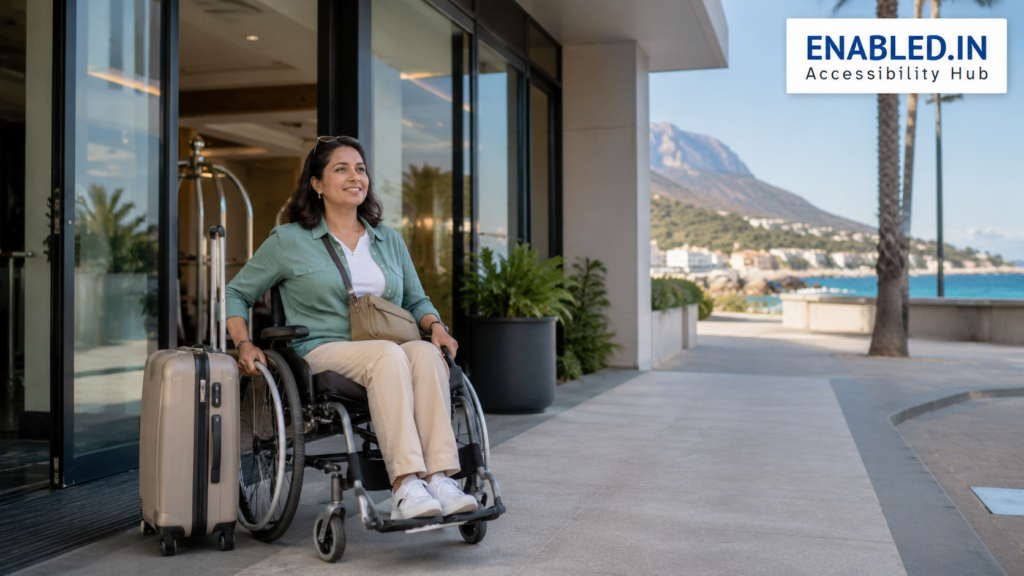
Accessible Tourism: Making Travel Inclusive for Persons with Disabilities
ravelling should be an opportunity to explore new places, meet people, enjoy different cultures and create memories.
However, for many persons with disabilities, a journey can involve uncertainty at every stage.
Will the booking website work with a screen reader? Is the hotel room really wheelchair accessible? Will the airport handle a powered wheelchair safely? Does the museum provide captions, audio descriptions or step-free access? Will trained assistance be available when needed?
Accessible tourism is about removing these uncertainties and barriers.
It ensures that persons with disabilities can plan, book, travel and enjoy a destination with greater independence, safety, choice and dignity.
Quick answer: What is accessible tourism?
Accessible tourism means making travel information, booking systems, transportation, accommodation, attractions and visitor services usable by people with different disabilities and access requirements.
It includes more than ramps, lifts and accessible toilets. Accessible tourism also covers:
- Websites and mobile applications.
- Booking and payment processes.
- Accessible transport.
- Clear communication.
- Reliable accessibility information.
- Trained staff.
- Accessible hotel rooms.
- Inclusive tourist attractions.
- Emergency procedures.
- Respectful customer service.
A tourism experience is only accessible when the complete journey works—from researching a destination to returning home.
Why is accessible tourism important?
The World Health Organization estimates that approximately 1.3 billion people, or 16% of the global population, experience significant disability. World Health Organization
This includes people with:
- Visual disabilities.
- Hearing disabilities.
- Mobility disabilities.
- Speech disabilities.
- Cognitive or learning disabilities.
- Neurological disabilities.
- Multiple disabilities.
- Non-visible disabilities.
The number of people who benefit from accessible tourism is even larger when older people, people with temporary injuries, pregnant travellers and families with young children are considered.
Accessible tourism is also connected to equal participation. Article 30 of the United Nations Convention on the Rights of Persons with Disabilities recognises the right of persons with disabilities to participate equally in cultural life, recreation, leisure and sport. United Nations CRPD Article 30
For a disabled traveller, accessibility can determine whether a journey is enjoyable, stressful or completely impossible.
Accessible tourism is an end-to-end journey
A hotel may have an accessible room, but the journey can still fail if:
- The booking website is inaccessible.
- The room’s accessibility information is unclear.
- The airport assistance does not arrive.
- Accessible transportation is unavailable.
- The wheelchair is damaged during the flight.
- The hotel entrance has steps.
- Staff are not trained.
- Local attractions are inaccessible.
Accessible tourism must therefore cover the complete visitor journey.
1. Researching the destination
Before booking, travellers need accurate information about:
- Transportation.
- Accommodation.
- Attractions.
- Restaurants.
- Toilets.
- Pathways and terrain.
- Medical facilities.
- Emergency services.
- Personal assistance.
- Mobility-equipment services.
Information should be provided in accessible digital formats and should explain specific accessibility features.
A statement such as “disabled friendly” is not enough.
A wheelchair user may need to know:
- Door width.
- Bed height.
- Space beside the bed.
- Bathroom layout.
- Grab-rail position.
- Shower type.
- Lift dimensions.
- Ramp gradient.
- Swimming-pool access.
- Availability of a shower chair.
A blind traveller may need information about:
- Tactile signs.
- Audio announcements.
- Staff assistance.
- Guide-dog policies.
- Accessible navigation.
- Braille or large-print information.
A Deaf traveller may need information about:
- Visual alarms.
- Captioned media.
- Text-based communication.
- Sign-language support.
- Hearing loops.
- Emergency notifications.
Accessibility information should be factual, measurable and regularly verified.
2. Booking the journey
Travel websites and mobile applications must be accessible.
A traveller should be able to:
- Search for destinations.
- Compare options.
- Filter accessible facilities.
- Select travel dates.
- Choose a room or seat.
- Request assistance.
- Enter passenger information.
- Make a payment.
- Read booking conditions.
- Receive confirmation.
- Modify or cancel a booking.
Common digital barriers include:
- Form fields without labels.
- Date pickers that cannot be used with a keyboard.
- Inaccessible CAPTCHA.
- Poor colour contrast.
- Unlabelled buttons.
- Time limits.
- Error messages that screen readers do not announce.
- Accessibility filters that provide little useful information.
- Important details available only in images or PDF files.
A traveller should not have to call customer support simply because the website or application is inaccessible.
3. Transportation
Accessible tourism requires connected and reliable transport.
This includes:
- Airlines and airports.
- Trains and railway stations.
- Buses and coaches.
- Taxis and ride services.
- Ferries and cruise services.
- Rental vehicles.
- Local public transport.
Accessibility requirements differ between countries and transport systems. Travellers should always verify applicable policies directly with the transport provider.
Accessible air travel
Air travel can create particular concerns for persons with disabilities.
These may include:
- Transferring between a wheelchair and an aircraft seat.
- Handling powered wheelchairs and batteries.
- Airport assistance.
- Accessible toilets.
- Boarding and disembarking.
- Seating requirements.
- Travelling with a guide dog.
- Communication during delays and emergencies.
- Damage to mobility equipment.
The International Civil Aviation Organization has emphasised that accessible air travel requires cooperation among governments, airlines, airports and disability communities. ICAO
In the European Union, passengers with disabilities and passengers with reduced mobility have specific protections under passenger-rights legislation, including assistance at no additional cost. European Commission passenger rights
Rights and assistance procedures vary by country. Travellers should check official rules for their departure, transit and destination locations.
4. Accessible accommodation
An accessible hotel should provide more than one room labelled “accessible.”
Accessibility should be considered throughout the property, including:
- Reservation process.
- Parking and arrival.
- Main entrance.
- Reception.
- Lifts.
- Corridors.
- Guest rooms.
- Bathrooms.
- Restaurants.
- Conference facilities.
- Swimming pools.
- Fitness facilities.
- Emergency exits.
- Evacuation procedures.
Accessible hotel information should specify
- Whether step-free access is available.
- Clear doorway widths.
- Lift dimensions.
- Bathroom features.
- Shower and bath arrangements.
- Grab-rail locations.
- Toilet height.
- Bed height.
- Space for wheelchair transfer.
- Accessible controls and switches.
- Visual and audible alarms.
- Hearing-loop availability.
- Guide-dog policy.
- Availability of accessible parking.
- Accessibility of dining and leisure facilities.
Current photographs of accessibility features can help travellers make informed decisions.
However, images should be accompanied by meaningful alternative text and written measurements.
5. Tourist attractions and experiences
Accessibility should be included in:
- Museums.
- Heritage sites.
- Beaches.
- Parks.
- Nature trails.
- Theatres.
- Sports venues.
- Shopping centres.
- Restaurants.
- Religious sites.
- Theme parks.
- Guided tours.
- Cultural events.
An attraction may provide:
- Step-free routes.
- Accessible toilets.
- Wheelchair or mobility-aid hire.
- Tactile exhibits.
- Audio-described tours.
- Sign-language interpretation.
- Captions and transcripts.
- Quiet spaces.
- Sensory guides.
- Easy-read information.
- Large-print materials.
- Trained visitor-assistance staff.
Not every historic or natural location can be changed in the same way. However, providers can still improve access through alternative routes, digital experiences, trained support and honest information about remaining barriers.
6. Communication accessibility
Accessible communication is essential throughout the journey.
Information may need to be available through:
- Clear written language.
- Audio.
- Captions.
- Sign language.
- Braille.
- Large print.
- Easy Read.
- Symbols or pictograms.
- Text-based customer support.
- Accessible digital documents.
Announcements about boarding, platform changes, delays and emergencies should not be communicated through sound alone.
Similarly, visual information should have an audio or text alternative when needed.
7. Staff awareness and respectful service
Even a well-designed facility can become inaccessible when staff are not trained.
Tourism employees should understand:
- How to offer assistance respectfully.
- Why they should speak directly to the disabled traveller.
- Why they should not touch a wheelchair, cane or assistance dog without permission.
- How to communicate with Deaf and hard-of-hearing customers.
- How to provide information to blind and low-vision travellers.
- How to support people with non-visible disabilities.
- How to respond during emergencies.
- How to handle accessibility complaints.
Staff should ask:
“How can I assist you?”
They should not make assumptions about what a person can or cannot do.
Disabled adults should be addressed directly rather than through a companion, interpreter or personal assistant.
Who benefits from accessible tourism?
Accessible tourism supports many people.
Wheelchair users and people with mobility disabilities
They may need:
- Step-free entrances.
- Ramps and lifts.
- Accessible transportation.
- Suitable bathrooms.
- Transfer space.
- Seating and rest areas.
- Safe storage for mobility equipment.
Blind and low-vision travellers
They may benefit from:
- Accessible websites.
- Audio information.
- Tactile signs.
- Clear verbal directions.
- Consistent layouts.
- Good lighting and contrast.
- Guide-dog access.
- Staff assistance.
Deaf and hard-of-hearing travellers
They may need:
- Captions.
- Visual announcements.
- Text-based support.
- Hearing loops.
- Sign-language interpretation.
- Visual alarms.
- Accessible emergency information.
People with cognitive or learning disabilities
They may benefit from:
- Simple instructions.
- Predictable processes.
- Easy Read information.
- Clear signs.
- Quiet areas.
- Additional time.
- Visual guides.
- Trained staff.
People with non-visible disabilities
Not every disability is immediately apparent.
A traveller may have:
- Autism.
- Epilepsy.
- Chronic pain.
- Diabetes.
- Mental health conditions.
- Hearing loss.
- Cognitive disabilities.
- Respiratory conditions.
- Fatigue-related conditions.
Support should not depend on whether a disability is visually obvious.
Accessible tourism is not limited to wheelchair access
One of the most common mistakes is treating accessibility as only a physical-access requirement.
A building may have a ramp but still be inaccessible because:
- Its website cannot be used with a screen reader.
- Its videos have no captions.
- The reception desk has no hearing loop.
- Emergency alarms are only audible.
- Information is difficult to understand.
- Online forms cannot be completed with a keyboard.
- Staff have not received disability-awareness training.
A complete accessibility approach includes:
- Physical access.
- Digital access.
- Communication access.
- Information access.
- Service access.
- Emergency access.
- Attitudinal inclusion.
What should disabled travellers check before booking?
Accessibility requirements are personal. A feature that works for one traveller may not work for another.
Before booking, consider asking:
- Is there step-free access from arrival to the room?
- What are the doorway, lift and bathroom measurements?
- Is accessible transportation available?
- Can the hotel provide current photographs?
- Are emergency alerts both audible and visual?
- Is the booking process accessible?
- Is staff assistance available?
- Are guide dogs or service animals accepted?
- Can mobility equipment be stored or charged safely?
- Are nearby attractions and restaurants accessible?
- Who should be contacted if assistance fails?
- Is the accessibility information recently verified?
Keep important confirmations in writing whenever possible.
Accessible tourism checklist for businesses
Tourism providers can begin with the following actions.
Information and booking
- Make the website and mobile application accessible.
- Follow WCAG 2.2 Level AA where appropriate.
- Provide detailed accessibility information.
- Use real photographs and measurements.
- Make accessibility filters meaningful.
- Offer accessible customer-support channels.
- Allow assistance requirements to be recorded during booking.
Physical environment
- Provide step-free routes.
- Maintain ramps and lifts.
- Keep accessible pathways free from obstacles.
- Provide suitable accessible toilets.
- Consider seating and rest areas.
- Ensure signs are clear and readable.
- Review emergency exits and evacuation processes.
Communication
- Caption video content.
- Provide transcripts.
- Offer visual and audible notifications.
- Use clear language.
- Provide accessible digital documents.
- Offer alternative communication methods.
- Consider tactile, Braille and Easy Read information.
Customer service
- Train staff.
- Speak directly to disabled travellers.
- Ask before providing assistance.
- Respect mobility aids and assistance animals.
- Avoid assumptions.
- Respond seriously to accessibility complaints.
- Involve persons with disabilities in service evaluation.
Continuous improvement
- Conduct accessibility audits.
- Test with assistive technologies.
- Include persons with disabilities in user testing.
- Record accessibility complaints.
- Track corrective actions.
- Review information regularly.
- Publish an accessibility statement.
- Assign responsibility to a named team or role.
Why accessible tourism is good for business
Accessibility is a human-rights and inclusion responsibility, but it also creates practical business benefits.
Accessible tourism can help providers:
- Reach more travellers.
- Serve older customers.
- Improve customer confidence.
- Reduce uncertainty before booking.
- Build customer loyalty.
- Support group and family travel.
- Strengthen brand reputation.
- Improve the experience for all visitors.
- Meet applicable accessibility requirements.
- Differentiate themselves from competitors.
A disabled traveller rarely travels alone in every situation. Accessible services can influence the choices of families, friends, colleagues and travel groups.
UN Tourism describes accessible travel as an opportunity for destinations and businesses to create tourism experiences that more people can enjoy. UN Tourism
The role of persons with disabilities
Tourism accessibility should not be designed without the people who use it.
Persons with disabilities should participate in:
- Destination planning.
- Building and service design.
- Website and application testing.
- Staff training.
- Accessibility audits.
- Policy development.
- Tourism marketing.
- Customer-experience research.
This follows the principle:
Nothing about us without us.
A checklist can identify requirements. Lived experience helps organisations understand how those requirements affect a real journey.
Accessible tourism supports freedom and dignity
Accessible tourism is not a special service for a small group.
It is about whether a person can:
- Choose where to travel.
- Make a booking independently.
- Receive accurate information.
- Travel safely.
- Access accommodation.
- Participate in activities.
- Communicate with staff.
- Protect personal privacy.
- Enjoy the same destination as family and friends.
True accessibility allows disabled travellers to make choices instead of depending on luck, assumptions or last-minute assistance.
The goal should not be to help persons with disabilities “overcome” inaccessible tourism. The goal should be to remove the barriers that make tourism inaccessible.
Frequently asked questions
What is accessible tourism?
Accessible tourism means making travel information, booking systems, transportation, accommodation, attractions and services usable by persons with different disabilities and access needs.
Is accessible tourism only for wheelchair users?
No. It includes the needs of people with visual, hearing, mobility, speech, cognitive, neurological and non-visible disabilities. It also benefits older people and people with temporary access needs.
What makes a hotel accessible?
An accessible hotel provides accurate booking information, step-free routes, suitable rooms and bathrooms, accessible communication, emergency support and trained staff. Accessibility requirements differ between travellers.
Why is website accessibility important for tourism?
Travellers use websites and applications to research destinations, request assistance, book rooms, buy tickets and make payments. An inaccessible booking system can prevent a person from travelling independently.
What should tourism businesses do first?
They should assess the complete customer journey, publish accurate accessibility information, improve physical and digital access, train employees, and involve persons with disabilities in testing.
What is the difference between accessible tourism and inclusive tourism?
Accessible tourism focuses on removing barriers for people with access requirements. Inclusive tourism has a broader goal of ensuring that diverse groups can participate equally. The two approaches are closely connected.
Are tourism accessibility requirements the same worldwide?
No. Laws, standards and passenger rights vary by country and transport mode. Travellers and businesses should consult the official requirements applicable to their location and journey.
About Enabled.in
Enabled.in has provided accessible disability information since 2009. We publish practical resources on disability, assistive technology, accessibility, employment, independent living and inclusive travel for readers in India and around the world.
Our accessible tourism content is intended to help travellers make informed decisions and encourage tourism providers to create safer, more inclusive experiences.
Organisations that need professional website, mobile application, kiosk or digital-platform accessibility testing can explore Enabled.in Digital Accessibility Services.